If you’ve been following data privacy news, you know that California’s CCPA and CPRA set the standard for how businesses collect and store customer information. But if you think California is the only state watching your website, it’s time to look closely at your analytics and marketing code.
A new wave of website tracking litigation—driven by strict state wiretapping laws like the California Invasion of Privacy Act (CIPA) and a rapidly expanding patchwork of state privacy legislation—is targeting businesses of all sizes across the country.
Here is what you need to know about where website tracking litigation stands, how state privacy laws are accelerating, and how to protect your organization.
The CIPA Threat: How Pixels & Chat Widgets Become Lawsuits
Under traditional privacy laws, businesses were usually fine as long as they had a standard privacy policy page on their site. However, trial attorneys and pro se plaintiffs have found a new loophole through CIPA (California Invasion of Privacy Act).
Originally written decades ago to prevent wiretapping, CIPA is now being applied to everyday website technologies:
- Third-Party Tracking Pixels & Analytics: Plaintiffs claim that tools capturing user interactions or IP addresses act as unauthorized digital wiretaps or “pen registers” without prior user consent.
- Live Chat & Session Replay: Recording chat conversations or session recordings is being challenged as illegal eavesdropping if third-party vendors process the data.
- Statutory Fines: CIPA allows for statutory damages of up to $5,000 per violation. Because plaintiffs argue each website visit constitutes a separate violation, total liability can quickly reach six or seven figures.
As highlighted in Spencer Fane’s analysis on CIPA website tracking litigation, these lawsuits often target businesses regardless of whether they have a physical footprint in California. If a California resident visits your site and a tracking pixel fires before they give explicit consent, you could receive a demand letter.
The US Data Privacy Patchwork Is Exploding
CIPA is only one piece of the puzzle. Across the nation, state-level consumer privacy acts are taking effect at an unprecedented pace.
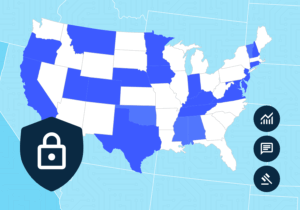
Over 20 states have enacted comprehensive privacy legislation. If your business markets or sells nationally, keeping track of these effective dates is critical:
Already Active (Passed Prior to 2025):
- California (CCPA/CPRA)
- Colorado, Connecticut, Utah, Virginia, Texas, Oregon, and Montana
Taking Effect / Active Recently (2025–2026):
- 2025: Delaware, Iowa, Maryland, Minnesota, Nebraska, New Hampshire, New Jersey, Tennessee
- 2026: Indiana, Kentucky, Rhode Island
Taking Effect Soon (2027–2028):
- 2027: Alabama, Louisiana, Oklahoma
- 2028: Vermont
What Your Business Should Do Right Now
Whether dealing with CIPA wiretapping claims or state privacy mandates, the core compliance flaw is almost always the same: trackers firing before consent is given.
A consent banner that pops up after Google Analytics or Meta Pixel has already loaded does not constitute valid prior consent.
To safeguard your brand:
- Audit Your Live Code: Know every third-party tag, pixel, or chat script running on your site.
- Implement Hard Consent Blocking: Configure your website so non-essential tracking scripts cannot fire until a user explicitly opts in.
- Align Privacy Policies with Technical Reality: Ensure your disclaimers accurately reflect the data your site actually captures.
Need Help Safeguarding Your Website?
Navigating state privacy requirements and technical tracking setups can feel overwhelming, but you don’t have to guess whether your site is compliant.
Our team performs comprehensive Website CCPA & Digital Compliance Audits to uncover hidden tracking risks, audit ADA accessibility gaps, and verify that your website is legally protected.
👉 Contact Hall today to schedule your Website Compliance Audit.
Disclaimer: The information provided in this article is for educational and informational purposes only and does not constitute formal legal advice. For specific legal compliance requirements regarding CIPA, CCPA, or state privacy laws, please consult with a qualified privacy attorney.