The Gamble of Doubling Down on Social Media

by

  Black Jack Hand
   

This article from Business Insider talks about how Proctor & Gamble is struggling to meet its marketing goals after the CEO made an announcement that they were going ‘all-in’ on social media.

In a recent interview, P&G’s CEO is now saying they are instead going to increase their paid search budget and focus on traditional marketing efforts like sampling. While P&G is working with the biggest ad budget on the planet, what they learned can shed some light for the rest of us.

Facebook Changed the Rules

One thing that made the gamble on social media not work the way P&G planned was that Facebook changed the rules of the game. Facebook changed its algorithm for what people see in their news feed. Business pages went down in impressions significantly.

Is it unfair for Facebook to ‘change the rules’? Not really. Facebook is a free service. It isn’t like you paid for the features they promised you. That free service comes to you thanks to ads delivered to you by your ‘likes’ and activities. As Facebook matures, its job is to show users the content and ads they respond to best. That left many a brand page on the cutting room floor.

What can you do?

So what is a business supposed to do? If Facebook is your marketing channel of choice, you need to make darn sure you are delivering really, really good content that people like and respond to. The more people like and respond to your content, the more you will show up in people’s news feeds.

Second, you need to focus your marketing efforts on your own territory! Those rules won’t change at the drop of a hat.

Your owned marketing territory is your website, your blog, your email list and/or your contact list. Social media sites are great, they are popular, they are where people are, but they are also owned by stakeholders that are worried about their social media sites making money, not how you use them to market your business.

Social media is a great way to let people know about your company, build trust, create conversations and engage current and future customers. What we as businesses need to do is use those opportunities to get people to do something else with your business like participate on your owned marketing channels.

photo credit: Images_of_Money via photopin cc

Thinking About Evolving Search Behavior

by

birds-thinkingI had an interesting conversation with a friend recently about kids in school in these modern times. We were reminiscing on how we had to collect information for school reports – libraries, old magazines, microfiche, interviews with experts and encyclopedias.

Neither of us have high school aged children, but now it seems kids just need to Google it and maybe purchase a reference on Amazon. Information surrounds us wherever we go.

We. Google. Everything.

We Google things we want to know more about. We Google people, news, questions, health facts, directions, businesses, videos, things to make us laugh, ex-boyfriends, the weather, answers to math questions, recipes and so much more.

The way we search is constantly evolving. In this Search Engine Journal article, the author speaks to Duane Forrester’s (Sr. Product Manager at Bing) breakdown of the new ‘search session’. We no longer type in a ‘one-and-done’ search. Instead, we make a series of searches, open multiple tabs and we rework our search terms until we feel we have found the perfect keywords to show us the best results.

Search is about the whole picture, now more than ever

So if that is how you and I search, why are we still optimizing for the one-and-done search? Each of those modified searches is part of the new search experience. The one-and-done search is now more about the entire experience. Meta descriptions, author markups, social media presence, page load time, multiple pieces of content marketing, user experience and design are a bigger factors than ever in the ‘search process’.

So what can you do to be prepared for new search behaviors?

  • Take stock of the whole picture your company is showing the world.
  • If there is a term you NEED to be found for, be found by multiple sources (your website, news, guest blogs, social media).
  • Be aware of the search landscape, how people find your site and of what makes them buy from you. You can find a lot of information in your site’s analytics to help you get a clearer picture of how people find you and move through the funnel. You also can learn a lot from your customers and your sales team about what value customers saw in your company that made them choose you over your competition.
  • Be clever. This title tag change from Infinum was brought to my attention from our designer. See below (or on their site) how the title tag changes when you click to a different tab in your browser. Clever.
    title-change

Search engines have changed – they have become more personal and show varied results. Searchers behaviors have changed, we no longer do the one-and-done search. What we use search engines for has changed. We need to adapt to these changes or we may be left in the dust. It may be time to rethink your company’s search experience and think less about keywords and rankings.

photo credit: dicktay2000 via photopin cc

Top Posts of 2012 – All About Facebook, Infographics and Google Analytics

by

I don’t know about you, but 2012 was a busy one over here! I think it is always fun to look back on the past year as we prepare for the next. I thought it would be fun to put together a list of our most popular blog posts again (determined by Pageviews in Google Analytics) from the previous year.

Here is the rundown of the most popular posts from 2012:

10 – What You Need to Know About Facebook Cover Images

Facebook had a crazy year – growth, user experience changes, advertising updates, IPO, and its fair share of controversy. A big change this past year was how business pages worked and looked. Adding cover images was a huge change to the look of business and personal pages.

9 – Understanding Google’s Disavow Tool – When and How to Use it

Do you know what your link profile looks like? Do you have unwanted spammy links coming in? In this post we look at how to assess both and if you need to use Google’s Disavow Tool to clean up your link profile.

8 – Should You Delete Bad Facebook Comments?

One of the scariest aspects of social media for businesses is that barriers are down and anyone can say anything (good or bad) about your business. When someone leaves a negative comment on your business Facebook page, should you remove it?

7 – Facebook Timeline Switch is Today

Facebook’s switch to the Timeline format was a major change in user experience. We listed some resources to help you figure out what the change meant for your business.

6 – How to Grow Your Mobile Presence [INFOGRAPHIC]

2012 was the year infographics exploded on the scene. In this infographic we use images to show how your business can grow its mobile presence.

5 – Responsive Website Design – What is it? [INFOGRAPHIC]

Responsive website design also was a popular topic in 2012. With the use of mobile phones and tablets on the rise, creating a site that has a good user experience on any device is more important than ever.

4 – Landing Page Optimization – Produce Better Conversions [INFOGRAPHIC]

Landing pages are a great way to increase conversions on your website. You can tailor content to be specific to what the user needs and is looking for. In this infographic, we break down the keys to successful landing page design.

3 – SEO at a Glance [INFOGRAPHIC]

SEO can seem very complicated. In this inforgraphic, we broke down the biggest elements of SEO that every website owner should be paying attention to.

2 – How do I exclude my internal traffic from Google Analytics reports?

To get the most accurate picture of how your website is performing, we recommend excluding your internal traffic from Analytics. This post shows you how to do just that.

1 – How to Turn Your Personal Facebook Page into a Business Facebook Page

Our most popular post again deals with the most popular social network – Facebook! With all the changes to Facebook over the years, some people made the mistake of setting up their business page as a personal page. This year Facebook gave us the opportunity to flip those without losing your page’s audience. This posts shows you how to make that switch.

Looking back at our top posts, they seem like a pretty good reflection of what was happening in our office last year. I looked back at the year before too (Ten Most Popular Blogs of 2011). Lots of times by looking back, it can help you prepare for what is to come. Do you do the same thing? What were hot topics for your blog and business this past year?

new-year-fireworks-2012

Cheers to a successful, busy, and fun 2013!

Photo credit: redcti

Social Media Crisis Management

by

We have seen them on blogs and in the news – some form of a social media crisis, tarnishing (or worse) a company’s reputation. The thought of that happening to your organization can actually be paralyzing. I talk to many businesses that are afraid of social media because they’re worried that someone may say something bad about their company or that anything bad will happen.

It is true. Something bad could happen. The thing is… with social media now we actually have the opportunity to hear what people are saying about us and our businesses. Those things were still being said before, but we rarely got to hear them.

I highly recommend putting together a social media crisis plan if you are going to actively participate in this space, even if you are only going to participate in it a little. Having a plan, discussing your fear and apprehension will make you more agile if you do have a social media incident on your hands.

Here are some major elements to dealing with a crisis on social media:

  1. Create a plan – The process of creating a social media crisis plan can be very empowering. Getting your concerns out on the table and getting key stakeholder’s opinions of what should happen, when and by who is a great conversation to have. Who manages your social media? Is it your marketing team? Well get other departments and people involved in your plan – legal, IT, sales, etc. Each will lend their perspective and knowledge to the conversation.
  2. Define a crisis- What to you is a social media crisis? When should the C-Suite or president get involved and when is it just a blemish your team can handle? Talk about scenarios before hand. If you see relevant stories in the news, bring them up and share them with your organization. Sometimes talking about what not to do is just as good as talking about what to do.

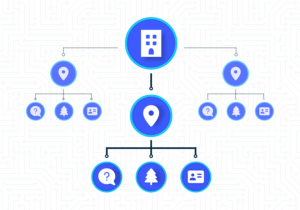
    Below is an example org chart from radian6 from their All-Star Social Media Crisis Response for Brands eBook on steps to carry out in the face of a social media crisis.

  3. Protect yourself with education – Most of the social media missteps and problems I have seen could have been prevented with a company-wide social media education program. Educating your staff about what social media is, how and why your company is using it and what is and what is not allowed can be priceless. Create social media guidelines for your company so everyone knows where they stand and what is not OK behavior to do online as a representative of your company.
  4. Catch it fast – If things do go wrong, you want to be right on top of it. Have processes in place so you know what is happening on your social media profiles in a timely manner. Almost all social networks have options for alerting you when someone mentions you or interacts with your profile. Many even have options to email you, if email is something you have your eye on all day maybe that is a good way to get alerts on what is happening online.
  5. Keep records – If you get in the situation where you need to take some type of action, keep a record of what happens and how you respond. Take screenshots of public postings and record emails. If it does get somewhere where your legal department or team needs to get involved, you will want documentation of where you are and how you got there.

In most cases, you won’t need a crisis management plan but having one protects you in more than one way. Getting your stakeholders and staff on the same page, having a plan in place and being organized will make you prepared for many situations you could find yourself in and prevent these things from happening in the first place.